
Quick Tips for Common First Aid Dog Emergencies
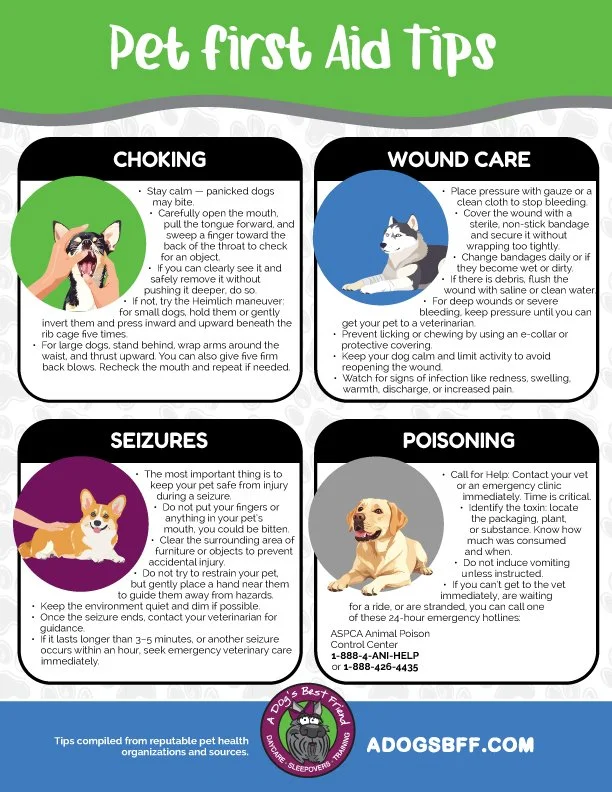
Click on image to print and/or download.
We’ve compiled some quick helpful tips for doggy first aid from our most reputable sources.
CHOKING
• Stay calm — panicked dogs may bite.
• Carefully open the mouth, pull the tongue forward, and sweep a finger toward the back of the throat to check for an object.
• If you can clearly see it and safely remove it without pushing it deeper, do so.
• If not, try the Heimlich maneuver: for small dogs, hold them or gently invert them and press inward and upward beneath the rib cage five times.
• For large dogs, stand behind, wrap arms around the waist, and thrust upward. You can also give five firm back blows. Recheck the mouth and repeat if needed.
WOUND CARE
• Place pressure with gauze or a clean cloth to stop bleeding.
• Cover the wound with a sterile, non-stick bandage and secure it without wrapping too tightly.
• Change bandages daily or if they become wet or dirty.
• If there is debris, flush the wound with saline or clean water.
• For deep wounds or severe bleeding, keep pressure until you can get your pet to a veterinarian.
• Prevent licking or chewing by using an e-collar or protective covering.
• Keep your dog calm and limit activity to avoid reopening the wound.
• Watch for signs of infection like redness, swelling, warmth, discharge, or increased pain.
POISINING
• Call for Help: Contact your vet or an emergency clinic immediately. Time is critical.
• Identify the toxin: locate the packaging, plant, or substance. Know how much was consumed and when.
• Do not induce vomiting unless instructed.
• If you can’t get to the vet immediately, are waiting for a ride, or are stranded, you can call one of these 24-hour emergency hotlines:
ASPCA Animal Poison Control Center 1-888-4-ANI-HELP or 1-888-426-4435
SEIZURES
• The most important thing is to keep your pet safe from injury during a seizure.
• Do not put your fingers or anything in your pet’s mouth, you could be bitten.
• Clear the surrounding area of furniture or objects to prevent accidental injury.
• Do not try to restrain your pet, but gently place a hand near them to guide them away from hazards.
• Keep the environment quiet and dim if possible.
• Once the seizure ends, contact your veterinarian for guidance.
• If it lasts longer than 3–5 minutes, or another seizure occurs within an hour, seek emergency veterinary care immediately.
Tips compiled from reputable pet health organizations and sources.