
Poison Prevention Awareness Month
Data from the ASPCA (American Society for the Prevention of Cruelty to Animals®).
Each year, the ASPCA Animal Poison Control Center (APCC) reviews its data to better understand the most common toxins pets are exposed to. In 2024 alone, APCC experts responded to more than 451,000 calls about animals coming into contact with potentially toxic substances — a nearly 4% increase from the year before.
With National Poison Prevention Month here, it’s a great reminder to take a closer look at everyday household items that could pose a risk to our pets. To help keep your furry family members safe, we’re sharing the top 10 pet toxins of 2024 so you know exactly what to watch for at home.
Take a moment to review the list below and make sure these items are stored safely and kept out of curious paws’ reach. You can even click the image and print it out as a handy reminder to post somewhere visible!
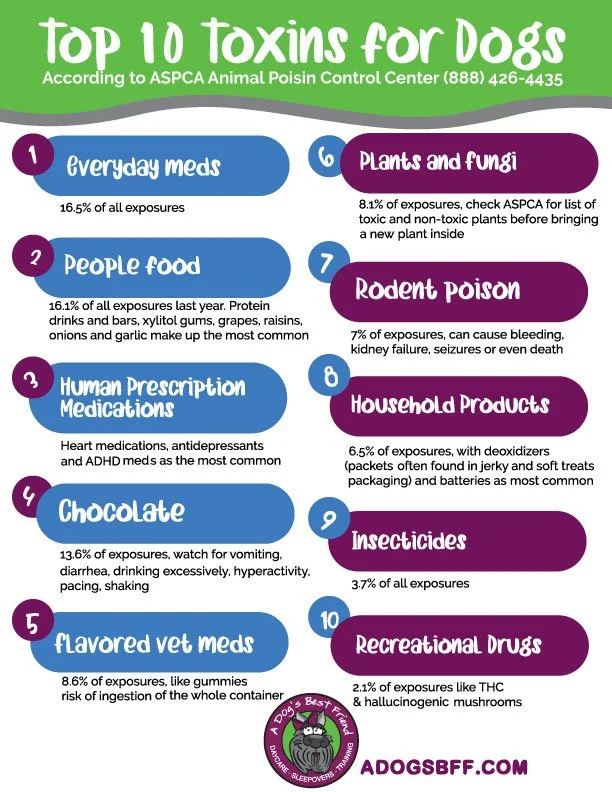
Our furry friends are curious… sometimes too curious! Here are the most common things pets got into last year — and what to keep out of reach:
1️⃣ Everyday meds (like ibuprofen, cold medicine, vitamins, and even joint rubs) are still the #1 culprit. Pills dropped on the floor or left in bags are easy targets for sniffing noses.
2️⃣ People food comes in at #2. Protein bars, xylitol gum, grapes, raisins, onions, and garlic are big offenders — especially when left on counters or in open trash cans.
3️⃣ Prescription medications (heart meds, antidepressants, ADHD meds) are another common risk. Closed cabinets = safer pets!
4️⃣ Chocolate keeps climbing the list. Remember: dogs don’t believe in “just one brownie.”
5️⃣ Flavored vet meds and calming chews taste great to pets — sometimes too great — making whole containers tempting snacks.
6️⃣ Plants and mushrooms indoors and outdoors can be toxic, so always check before bringing greenery home.
7️⃣ Rodent poison is especially risky in winter and dangerous even in small amounts.
8️⃣ Household items like battery packs and food-package deoxidizer packets can cause serious harm.
9️⃣ Insecticides can be risky if not stored or used properly.
🔟 Recreational drugs round out the list, with mushroom exposures on the rise.
Bottom line: if you wouldn’t hand it to your pet as a treat, keep it safely stored away!
If you think your pet got into something toxic, call your veterinarian or the ASPCA Animal Poison Control Center (888-426-4435) right away.